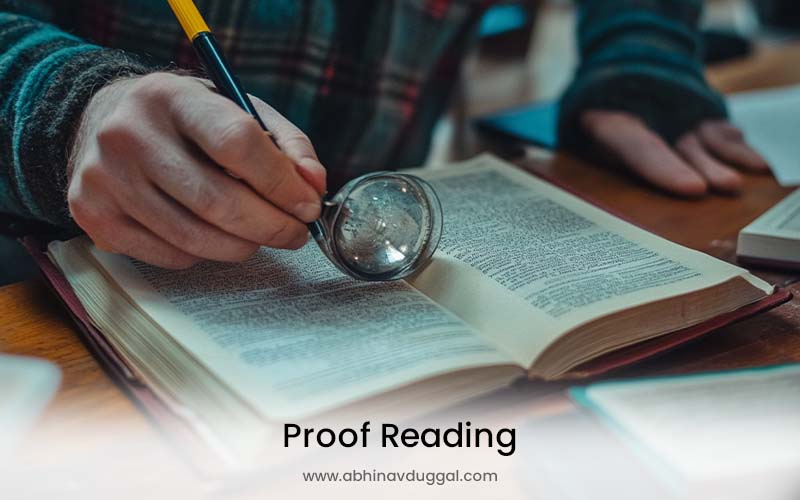
Proof Reading is the process of carefully checking a written document to remove errors in spelling, grammar, punctuation, and formatting. It is the last step before publishing, submitting, or sharing a piece of writing. Proof Reading helps make the content professional, clear, and free from mistakes. Whether it is academic writing, business communication, website content, or creative work, Proof Reading plays an important role in improving the quality of text.
What is Proof Reading
Proof Reading means reviewing the final draft of a text to ensure accuracy. It is different from editing because editing focuses on sentence structure, style, and flow, while Proof Reading is only about correcting small errors. It makes sure the document looks polished and professional.
Importance of Proof Reading
Proof Reading is very important in communication because even a small mistake can change the meaning of a sentence. Errors reduce the impact of writing and make it look unprofessional. Proof Reading ensures that the message is clear and that readers trust the writer or business.
Benefits of Proof Reading
Improves Readability
Proof Reading corrects mistakes and makes text easy to read and understand.
Builds Professional Image
A proofread document shows attention to detail, which helps build professionalism.
Avoids Miscommunication
Correct grammar and punctuation prevent misunderstandings between the writer and the reader.
Saves Time and Cost
Proof Reading before submission avoids the need for corrections later.
Supports Academic and Business Success
Students score better and businesses earn trust with error-free documents.
Key Elements of Proof Reading
Grammar Check
Look for subject-verb agreement, proper tense, and sentence correctness.
Spelling Correction
Find and correct common spelling mistakes and typos.
Punctuation Review
Check the use of commas, periods, quotation marks, and other punctuation symbols.
Formatting Consistency
Ensure proper font, heading style, spacing, and alignment.
Tone and Word Choice
Maintain consistency in tone, style, and vocabulary.
Steps in Proof Reading
Step 1: First Reading
Read the whole document to get an overall idea.
Step 2: Focus on Details
Check grammar, spelling, and punctuation one by one.
Step 3: Read Aloud
Reading aloud helps to hear errors that are hard to see.
Step 4: Use Tools
Grammar checkers and proofreading tools can assist in finding errors.
Step 5: Final Review
Read again after corrections to ensure no mistake is left.
Types of Proof Reading
Academic Proof Reading
Used in essays, research papers, and dissertations for students.
Business Proof Reading
Done for reports, proposals, and emails in companies.
Website Proof Reading
Used for blogs, articles, and product descriptions on websites.
Book Proof Reading
Important for novels, stories, and publications before printing.
Resume Proof Reading
Makes sure resumes and cover letters are error-free.
Techniques for Effective Proof Reading
Print the Text
Reading on paper helps notice errors more easily than on screen.
Use a Ruler or Finger
Helps to focus on one line at a time without skipping.
Change Font Style or Size
Changing how the text looks makes it easier to catch mistakes.
Proof Read Backwards
Reading sentences from the end helps catch spelling mistakes.
Take Breaks
Resting between proofreads helps refresh the mind.
Common Mistakes in Proof Reading
Rushing the Process
Hurrying through Proof Reading causes missed errors.
Depending Only on Tools
Software helps but cannot detect every mistake.
Ignoring Punctuation
Some people only check spelling but forget punctuation.
Not Re-reading
Proof Reading only once may leave hidden errors.
Skipping Formatting
Many focus only on grammar and ignore layout.
Why Businesses Need Proof Reading
Businesses must present themselves professionally to clients and customers. A single mistake in marketing material, email, or contract can reduce trust and cause loss. Proof Reading ensures business communication is accurate, professional, and trustworthy. It improves the brand image and customer experience.
Proof Reading Tools
Grammarly
Helps detect grammar, punctuation, and spelling mistakes.
Hemingway Editor
Improves readability and sentence clarity.
ProWritingAid
Provides detailed grammar and style corrections.
Microsoft Word Spell Check
Basic tool for quick corrections in documents.
Tips for Better Proof Reading
Take Your Time
Slow and careful reading improves accuracy.
Focus on Weak Areas
Pay attention to areas where mistakes often occur.
Read Multiple Times
Proof Reading more than once helps find hidden errors.
Use Checklists
Create a checklist for grammar, spelling, punctuation, and formatting.
Ask for Help
A second reader may find mistakes that you missed.
Professional Proof Reading Services
Professional proof readers are trained to find even the smallest errors. They help students, businesses, and authors improve the quality of their documents. Hiring a professional ensures accuracy, saves time, and creates a polished final product.
Future of Proof Reading
As digital content grows, Proof Reading is becoming more important. Online businesses, bloggers, and publishers need perfect content to attract readers. Artificial intelligence tools will assist, but human Proof Reading will remain necessary because humans understand context better.
Related: our full range of services, some recent work, or get in touch to discuss your project. For general background reading, see the Content Marketing Institute (external link).
Who writes the content?
Our in-house writers, briefed on your business and audience — not generic filler.
Can I request revisions?
Yes, revisions are part of the process until the content matches what you need.
Do you write for my specific industry?
We research your industry and audience before writing, rather than reusing generic templates.
Proof Reading
Even good writing can have small mistakes — typos, awkward sentences, or inconsistent tone. Our proof reading service catches these before your content goes live, whether it is website copy, a document, or marketing material.
What We Check
- Spelling and grammar mistakes
- Awkward or unclear sentences
- Consistent tone and style
- Formatting issues
Frequently Asked Questions
What is the difference between proof reading and editing?
Proof reading focuses on catching errors like spelling and grammar; editing can also involve restructuring content.
What kind of content can you proof read?
Website copy, blog posts, brochures, documents and marketing material.
How quickly can you proof read my content?
Turnaround depends on length, but most short documents are completed within a day or two.
Will you rewrite sentences, or just flag mistakes?
We fix clear errors directly and flag anything that needs your input on tone or meaning.
Can you proof read content that is not in English?
We primarily work in English; contact us to check if your specific language is supported.
Do you check for SEO issues too?
Proof reading focuses on writing quality; for SEO-specific review, see our SEO service.
How do I send you content to proof read?
You can share a document or paste the text when you contact us.
Is proof reading a one-time service or ongoing?
Either — we do one-off jobs and ongoing proof reading for regularly published content.
Can you proof read content someone else wrote for me?
Yes, we proof read content regardless of who originally wrote it.
How do I get a quote for proof reading?
Contact us with the content and its approximate length, and we will quote quickly.